

HR without an HR department.
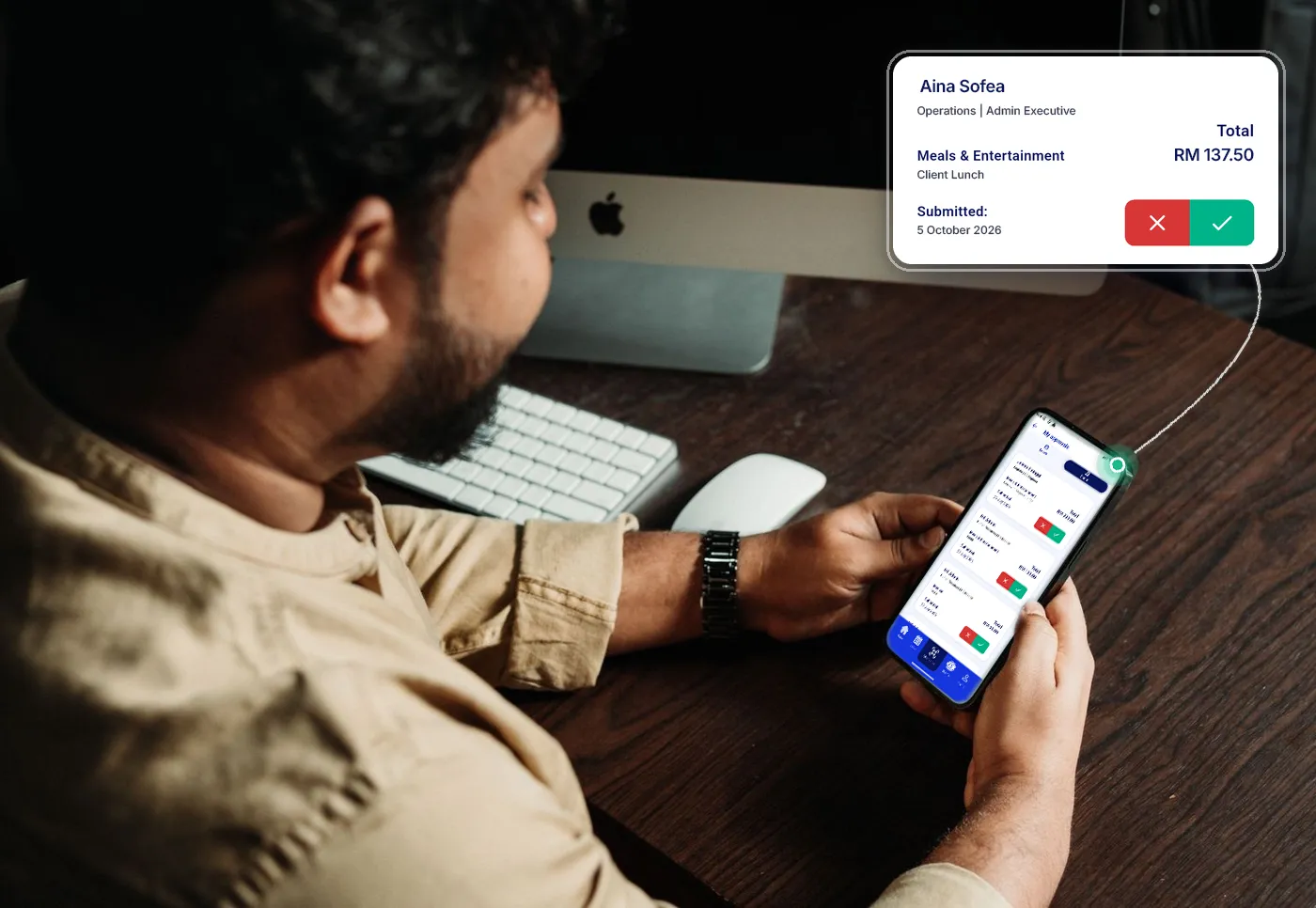
In a small firm, the owner or one admin person is HR, Finance and Payroll on the same afternoon. Kiplework takes the keying, the chasing and the month-end panic off that one desk. Staff do everything from the phone.
Built for the small business you actually run.
Ten people or two hundred, the problem is the same: one person doing HR on the side, and staff who want answers on their phone.

Professional services
Accountants, agencies and consultancies. Leave and claims from the phone, and payroll reviewed in minutes, not rebuilt every month.

Clinics and wellness
Doctors, nurses and front desk on different shifts and grades. Allowances set once per staff member and paid in the monthly run.
Workshops and trades
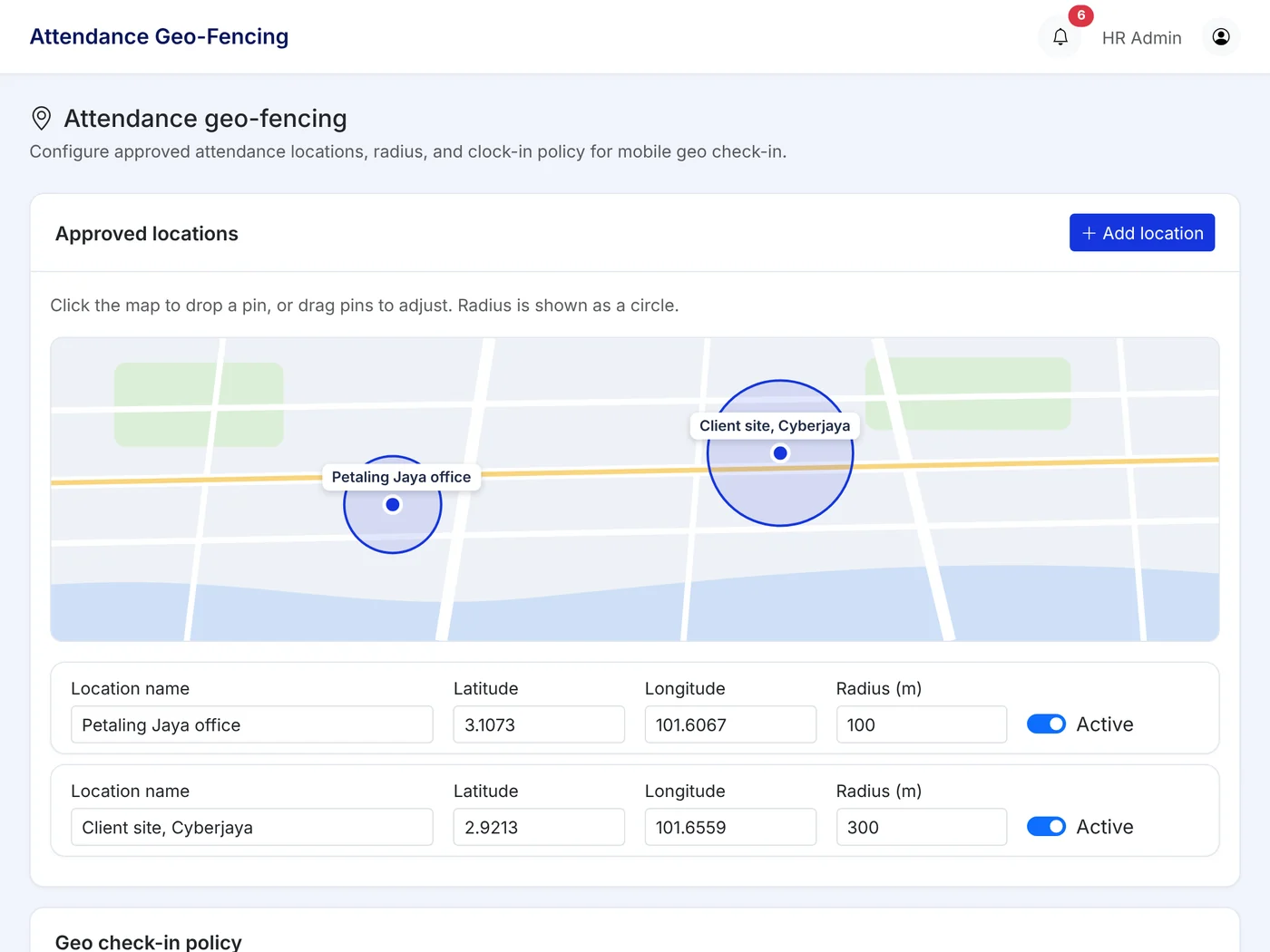
Mechanics, technicians and site crews. Clock in on site by geofence, and claim parts and tolls with a receipt photo.
Small manufacturers
Production teams on shifts with overtime. Hours worked out from clock times and pushed straight into payroll.

Shops and cafes
One to five outlets, run by the owner. Shifts per outlet, and small claims approved by rule and paid to the wallet.
Built for the company where one desk does it all.
The owner sets the rules once. Kiplework does the sums. Staff never need to ask.
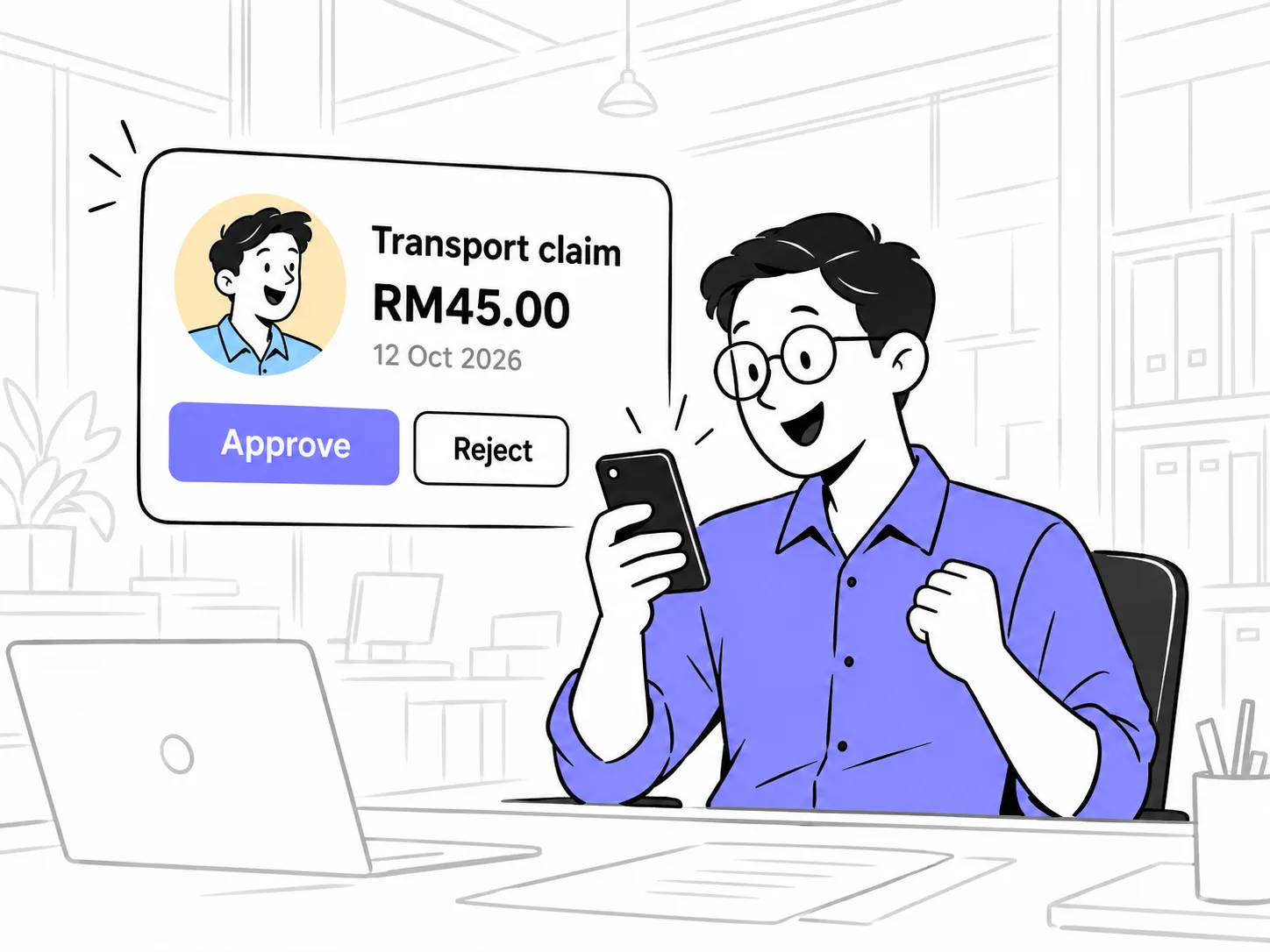
Owner or director
Approve leave and claims from the phone, see payroll before it runs, and let small claims approve themselves so nothing waits for you.
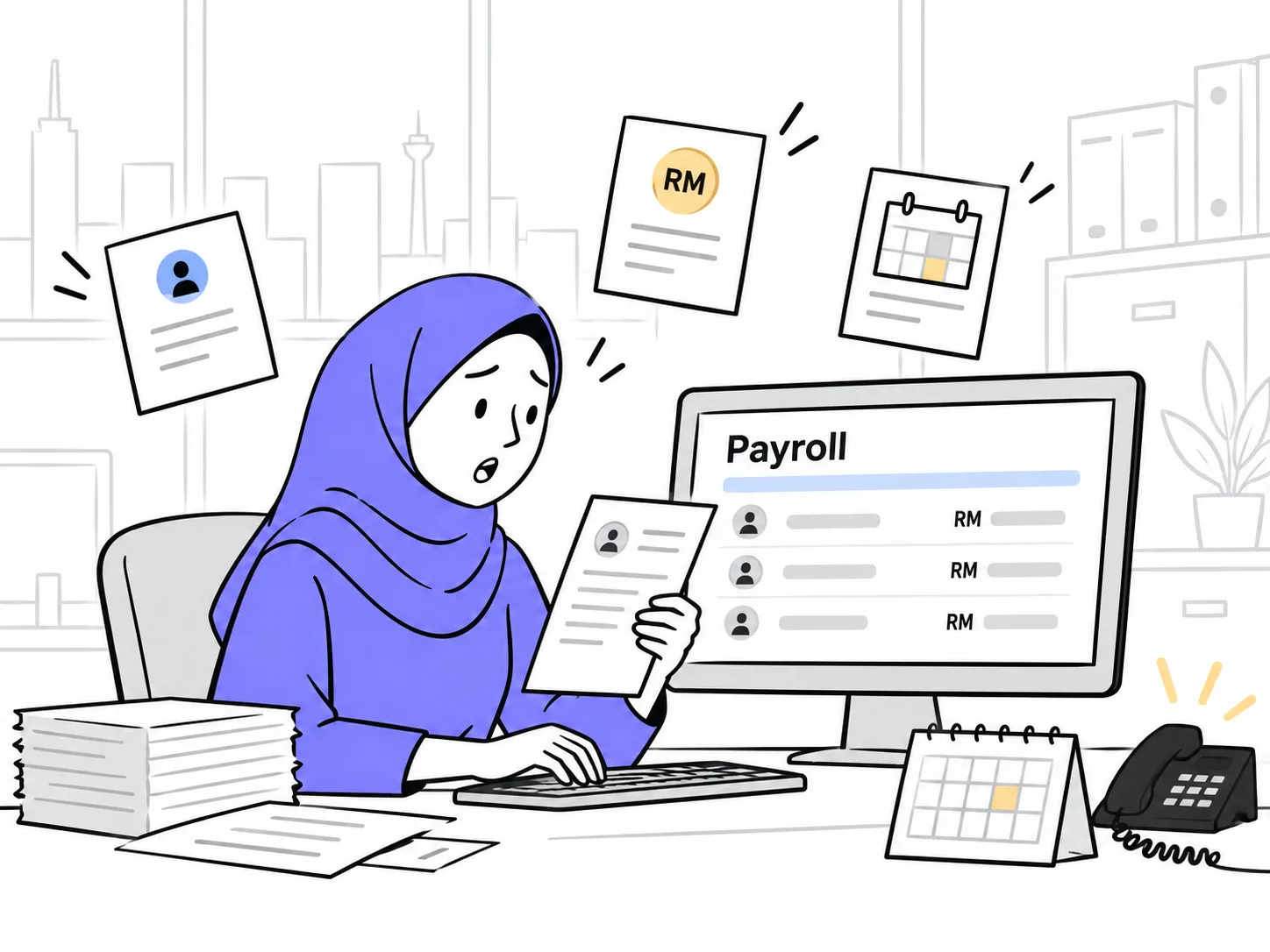
Admin, HR or accounts
One staff list, one payroll run, statutory worked out for you. Payslips go to the app and reports go to your accountant.
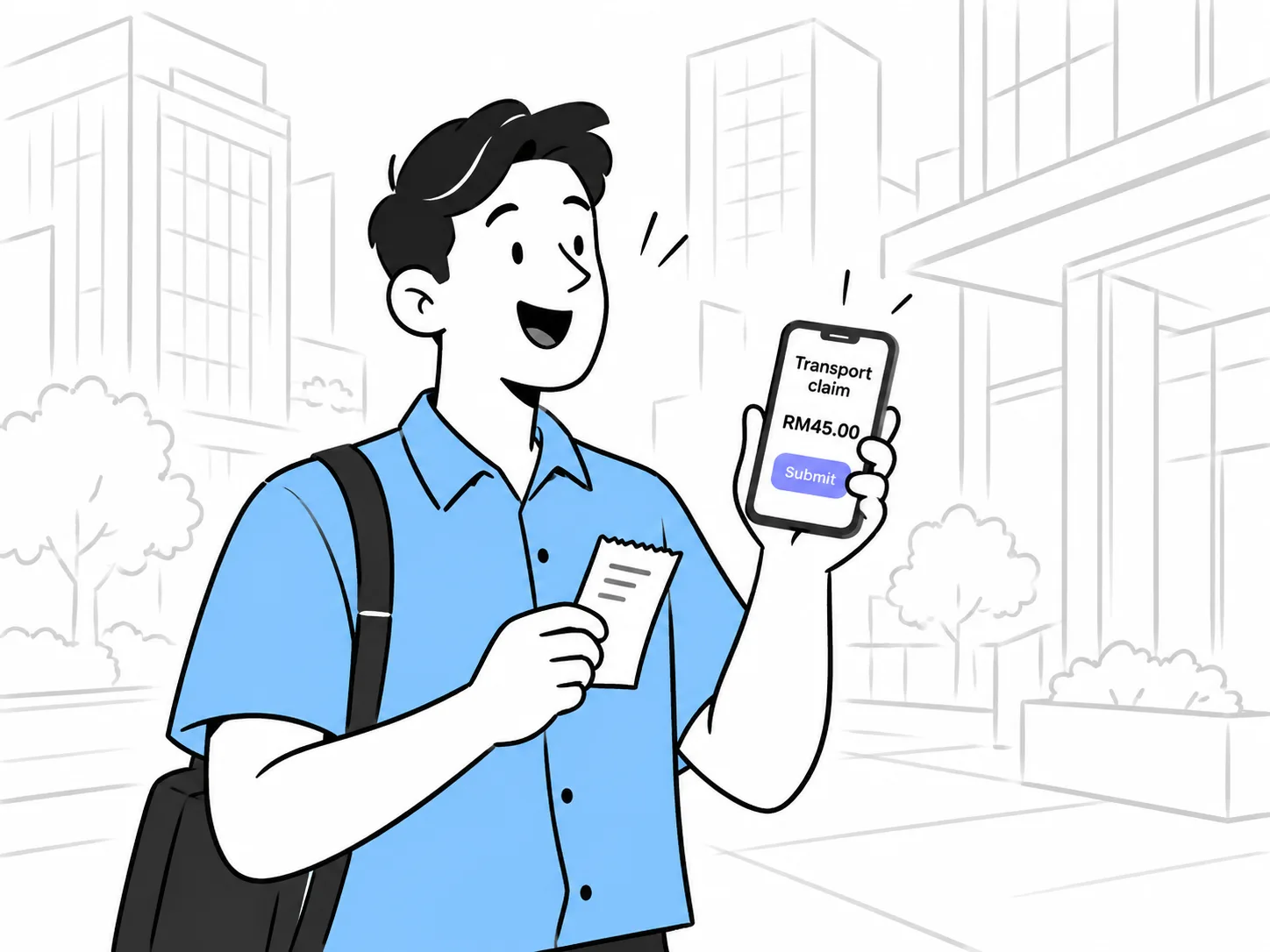
Staff
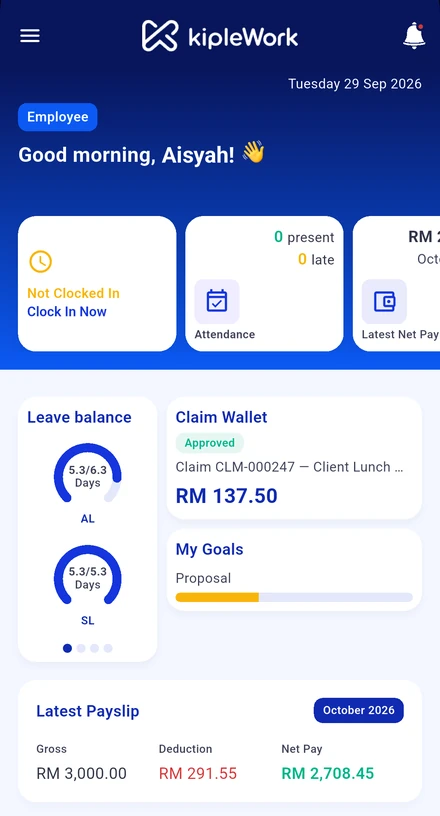
Apply for leave, snap a receipt and get paid to the wallet. Payslips and leave balances on the phone they already carry.
Payroll becomes a review, not a calculation.
Import your staff, switch on what you need, and let the rules handle the routine.
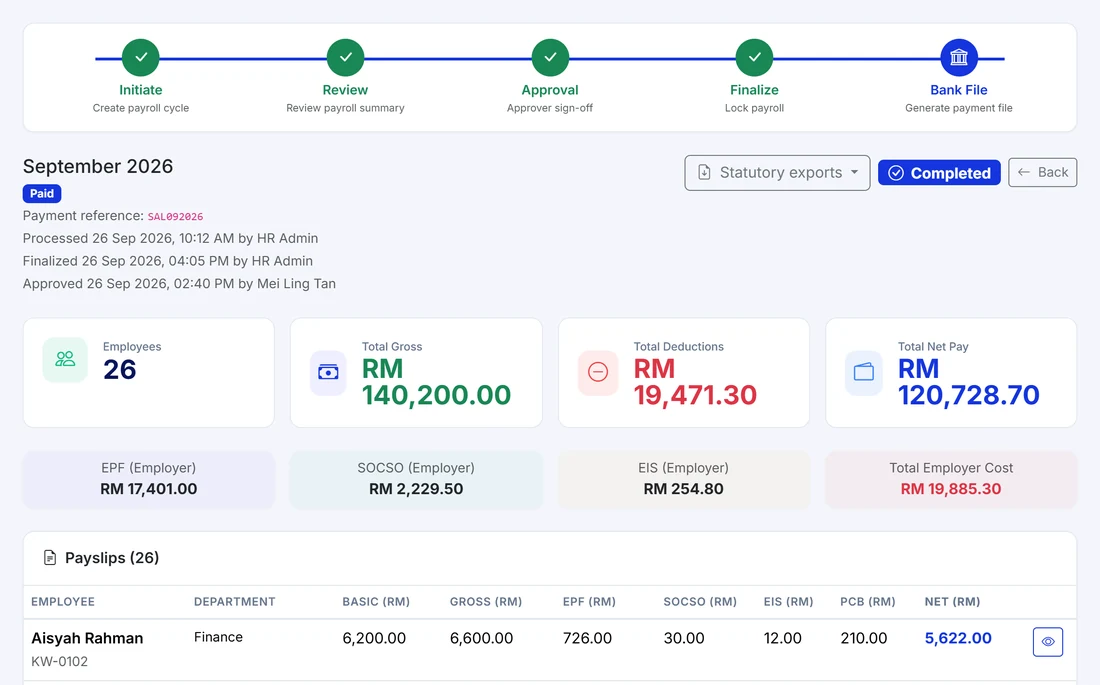
The modules small businesses switch on first.
Every module is included in the same per user price. Switch on what you need.




EPF: Employees Provident Fund. SOCSO: Social Security Organisation. EIS: Employment Insurance System. PCB: Potongan Cukai Bulanan, monthly tax deduction. HRDF: Human Resource Development Fund levy. QR: quick response code.
From spreadsheet to live in an afternoon.
Most small teams are live the same day they start.
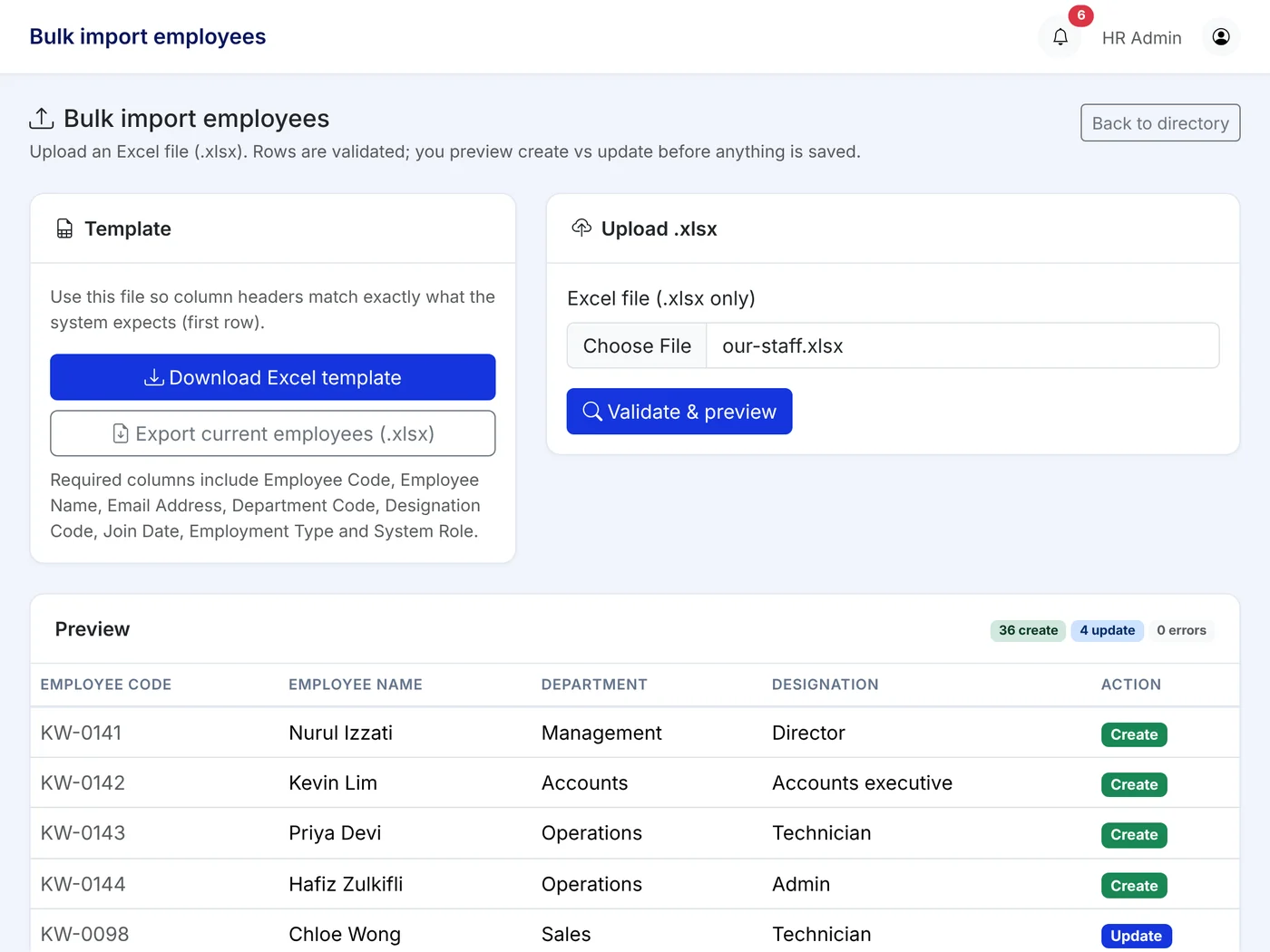
Import your staff
Fill the Excel template with your staff list. Upload once.
Set your rules
Add your work location, working hours and leave policy. Overtime follows your policy.
Switch on modules
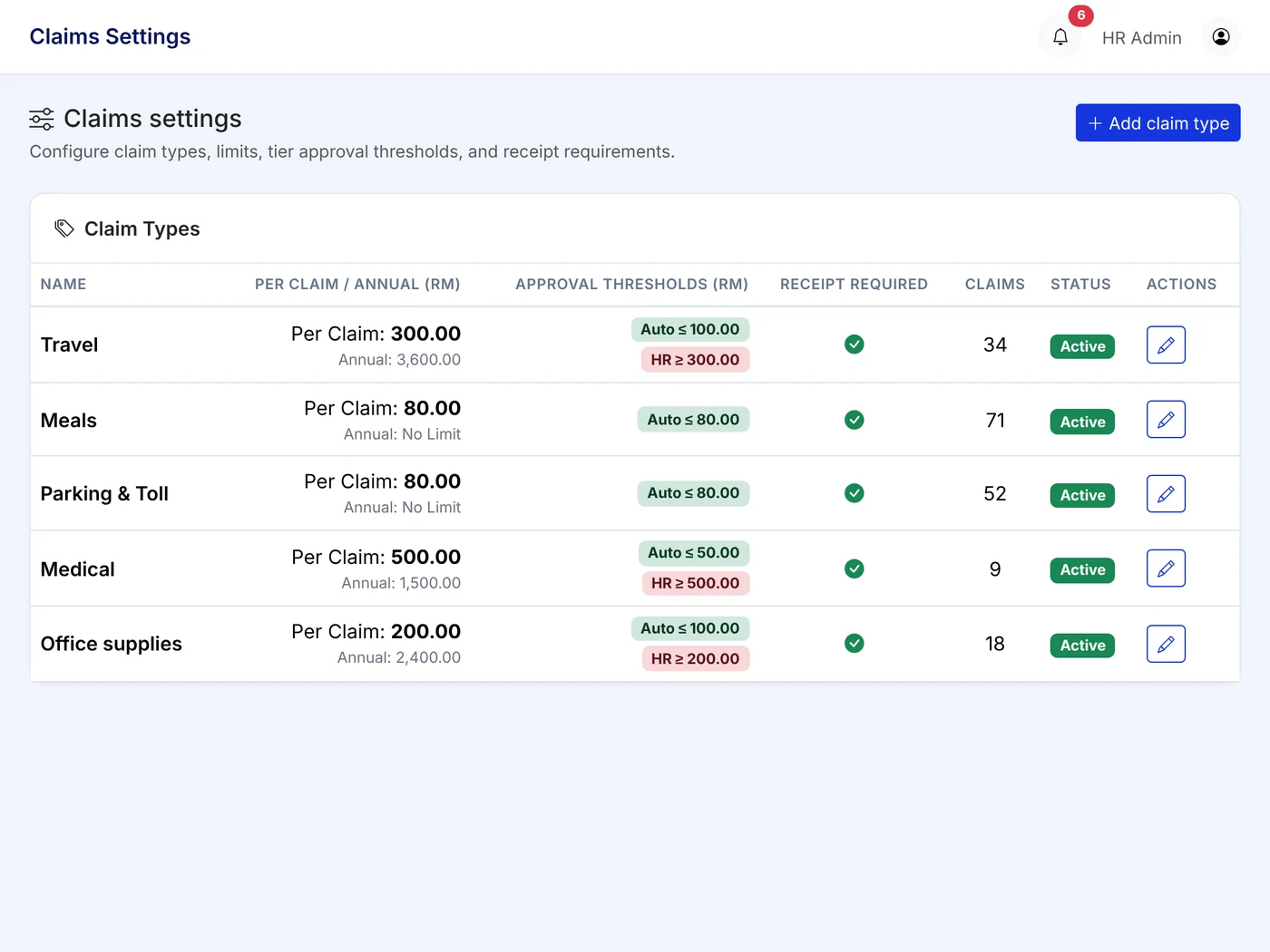
Turn on payroll, leave, claims and the wallet. Set the auto-approve limit and caps. Prefund the wallet.
Invite your team
Staff download the app, verify once with eKYC, and start clocking in and claiming.
Why small businesses pick Kiplework.
Three things most HR systems in Malaysia do not do.
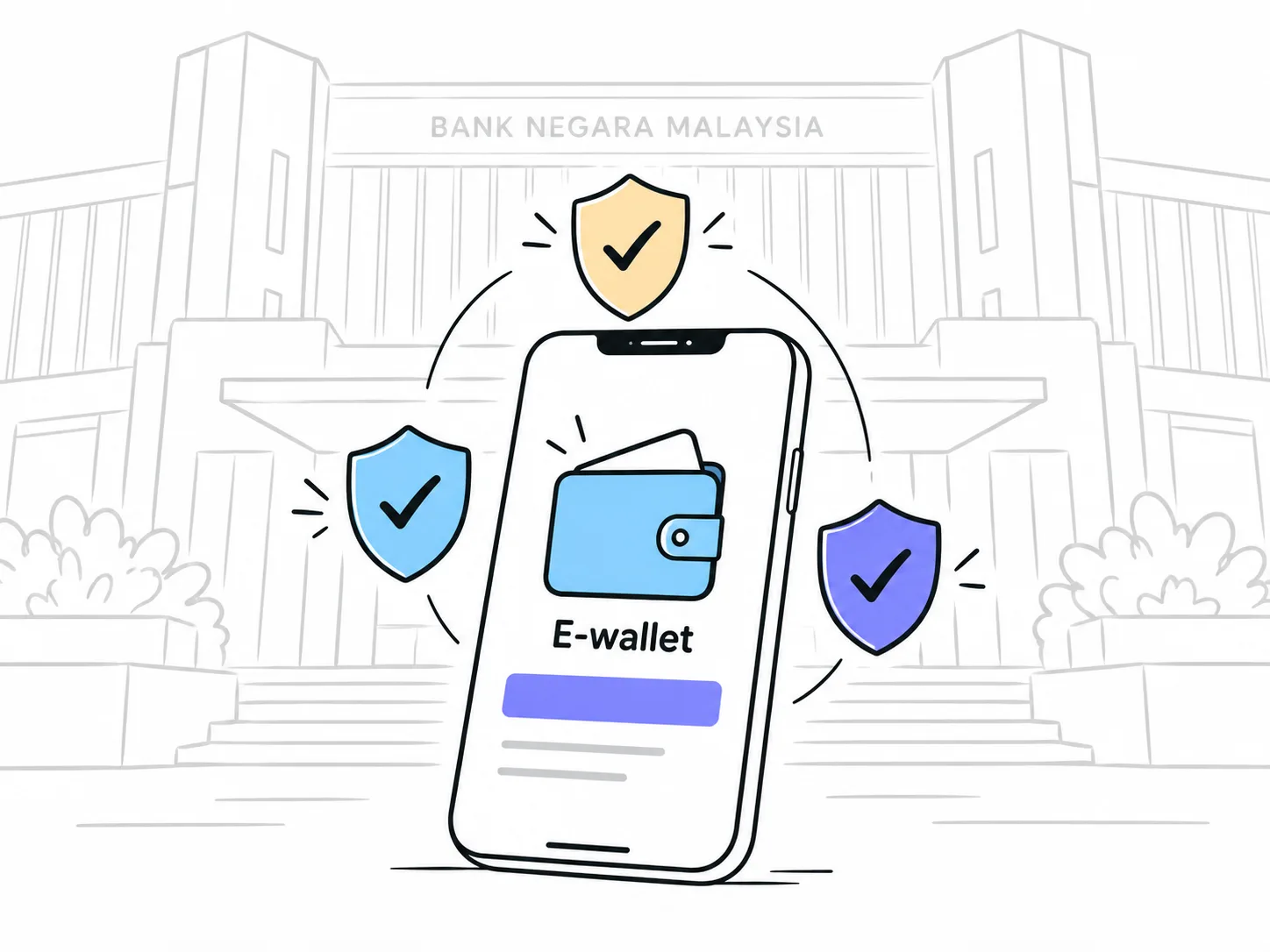
The wallet is built in
Approved claims become money the same day, without Finance keying anything into the bank. Kiplepay is an e-money issuer approved by Bank Negara Malaysia.
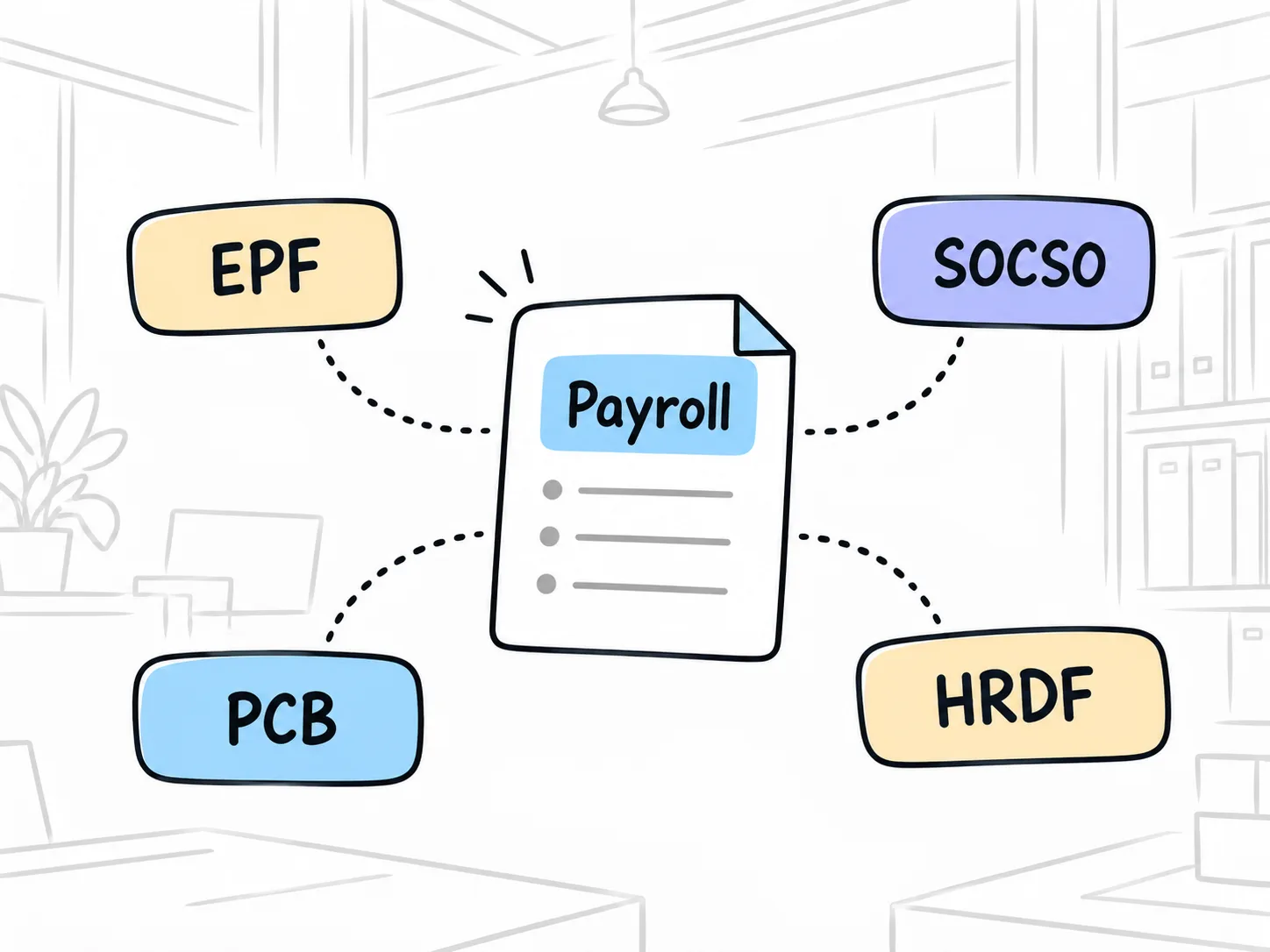
Malaysian statutory, done
EPF, SOCSO, EIS, PCB and HRDF follow the official tables. Statutory forms come from the same pay run, not rebuilt in Excel every month.
Priced per user, no tiers
Early bird pricing is RM6 per user per month with every module included. A ten-person firm pays for ten people, nothing more.
Questions small businesses ask.
Short answers. The full help centre has more.
How fast is an instant claim, really?
Tier 1 and Tier 2 claims paid to e-Wallet are credited on approval, as long as the staff member is verified and your prefund balance is sufficient. Tier 3 claims need manager plus HR approval and go by bank transfer.
What if staff clock in outside the set location?
The clock-in still goes through and is flagged to the manager or HR. It is not blocked. You can also use a QR code where GPS is not practical.
How do I check my leave balance?
Open the Leave tab. Your balance for each leave type is shown in real time, so there is no need to ask HR.
What types of claims can I submit?
That depends on what your company has set up. Common types include medical, travel, mileage and petrol claims.
How do I apply for leave?
Go to Leave, tap Apply Leave, choose the type, dates and reason, attach a document if required, and submit. The system counts working days automatically, excluding weekends and public holidays.
What is the difference between Tier 1, Tier 2 and Tier 3 claims?
Tier 1 claims, the small ones, approve automatically. Tier 2 needs one manager approval. Tier 3 needs manager plus HR approval and is paid by bank transfer. Your company sets the ringgit thresholds.
See it run your next payroll.
Register your interest and we will set up your company with your staff list and claim rules on the real product, before your first live run.